
Buying Reptiles at Expos: The Benefits, Risks, and Questions You Should Ask
Reptile expos offer selection, competitive prices, and access to breeders—but they also create opportunities for rushed decisions. Learn what to examine, which questions to ask, and why every new reptile still requires quarantine.
NEWS & UPDATESBALL PYTHON CAREBEGINNER KEEPER GUIDES
Emerald City Reptiles
7/26/20267 min read
Buying Reptiles at Expos: The Benefits, Risks, and Questions You Should Ask
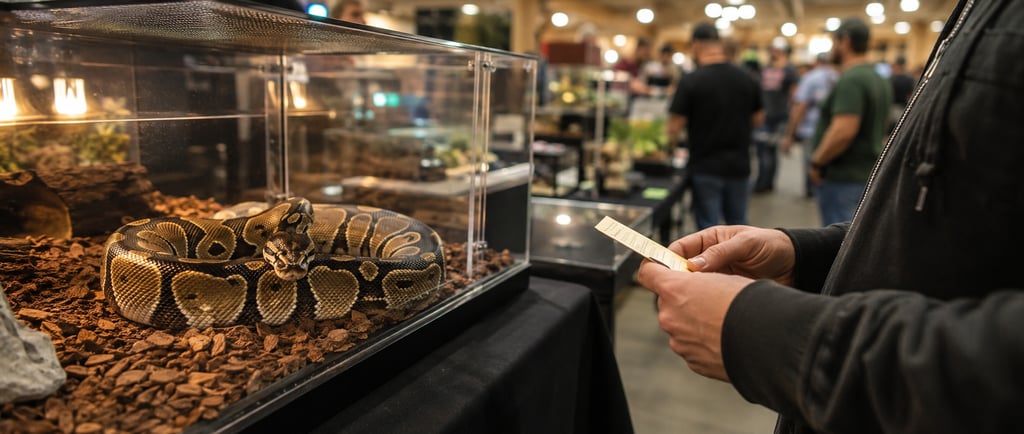
Reptile shows and expos can be some of the best places to purchase a new animal. You can meet breeders face-to-face, compare several animals in one location, see species that may not be available locally, and ask questions directly before spending your money.
However, an expo can also be one of the easiest places to make a rushed and expensive mistake.
The number of animals, crowded aisles, limited-time deals, and excitement of the day can pressure buyers into making decisions they would normally take more time to consider. An animal may appear healthy during a brief examination but still have feeding problems, parasites, an incomplete history, or incorrectly represented genetics.
A reptile expo gives you more choices—but it does not necessarily give you more protection. You must still evaluate the animal, the seller, and the terms of the purchase carefully.
The Benefits of Buying at a Reptile Expo
There are several legitimate advantages to buying reptiles at a show.
You Can See the Animal in Person
Photographs and videos are helpful, but they do not always show an animal accurately. Lighting, editing, camera settings, and even the animal’s position can affect how its color, pattern, and body condition appear.
At an expo, you can examine the animal before purchasing it. Depending on the seller’s rules and how busy the table is, you may be able to get a closer look at its eyes, mouth, vent, skin, body condition, movement, and overall alertness.
This does not replace a veterinary examination, but it gives you information that cannot always be obtained from an online listing.
You Can Compare Animals and Prices
A show may give you the opportunity to compare animals from several breeders. This can help you better understand differences in quality, size, genetics, documentation, and price.
Price should be part of your decision, but it should never be the entire decision. Two animals labeled as the same species or morph may have very different histories and levels of breeder support behind them.
The least expensive animal is not automatically the best value.
You Can Speak Directly With the Breeder
A good breeder should be willing to discuss how the animal was produced, what it is eating, how consistently it has been feeding, and whether it has experienced any problems.
That conversation can tell you almost as much as the animal itself.
Pay attention to whether the seller answers questions directly or gives vague responses. A knowledgeable breeder should not need to promise that every animal is “perfect.” Honest breeders understand that buyers need accurate information, including information that may not make the sale easier.
You May Find Uncommon Animals
Expos often bring together breeders working with different species, morphs, localities, and bloodlines. This can give buyers access to animals that may be difficult to find at pet stores or in local classified ads.
For an experienced keeper who has done the research and prepared the enclosure, this variety can be a real advantage.
The Risks Buyers Often Overlook
Reptile expos are not inherently unsafe. The concern is that the environment can make it more difficult to make careful decisions.
Not Every Vendor Produced the Animals They Are Selling
Some tables are operated by breeders who sell animals they personally bred. Others may include animals acquired through trade, collection, wholesaling, importation, or purchase from other breeders.
That does not automatically mean an animal is unhealthy or that the seller is dishonest. It does mean you should ask where the animal came from and how long the vendor has had it.
A seller who did not produce the animal may have limited knowledge of its age, parents, previous care, feeding history, or exposure to other reptiles.
A Professional Display Is Not Proof of a Professional Breeder
A large banner, an attractive table, and hundreds of animals can create a strong first impression. None of those things confirms that the seller keeps accurate records, provides support after the sale, or produces the animals being offered.
Evaluate the answers you receive—not just the appearance of the display.
The same is true in reverse. A smaller breeder with a modest table may have excellent animals, detailed records, and years of experience. Table size is not a measure of animal quality or integrity.
Crowded Conditions Make Examination Difficult
Expos can be noisy, warm, and crowded. Sellers may be helping several customers at once, and animals are often displayed in small temporary containers so buyers can see them.
Those conditions make it difficult to perform a thorough evaluation. Stress may also cause an animal to remain unusually still, become defensive, breathe more rapidly, or behave differently than it would under normal conditions.
Take your time. If the seller will not allow a reasonable examination or answer basic questions, do not let the crowd pressure you into buying.
Information Can Be Incorrect
Sex, genetics, locality, hatch date, and feeding history may occasionally be recorded or represented incorrectly.
With ball pythons, for example, some genetic traits cannot be guaranteed simply by looking at the animal. A possible het is not the same as a proven or guaranteed het, and verbal claims about genetics are difficult to rely on later if nothing was provided in writing.
Sex should also be confirmed using an appropriate method by someone qualified to do so. If the animal is being purchased for a future breeding project, an incorrectly sexed animal can cost you years of planning.
Ask for documentation and keep the receipt, breeder information, animal identification, and any written guarantees.
The Danger of the “Expo Deal”
Discounts and package prices are common at shows, especially near the end of the day. Sometimes these are genuine opportunities. A breeder may prefer to sell an animal rather than transport it home, or may offer a reasonable discount when someone purchases multiple animals.
But a low price should never cause you to ignore unanswered questions.
An inexpensive reptile can quickly become an expensive purchase if it requires veterinary care, refuses food, was incorrectly sexed, has undocumented genetics, or introduces mites or illness into an established collection.
Before buying, ask yourself:
Would I still want this animal if it were not discounted?
Have I researched the species beyond what the seller just told me?
Is the enclosure already prepared?
Can I provide the correct heat, humidity, food, and long-term space?
Do I have a proper quarantine area?
Am I buying this animal because it fits my plans—or because I am afraid someone else will buy it first?
If the deal only makes sense while you are standing in a crowded aisle, it may not be a good deal.
Ten Questions to Ask Before Purchasing
Before money changes hands, ask the seller these questions:
Did you produce this animal yourself?
If not, ask where it came from and what the seller knows about its previous history.How long have you had it?
An animal acquired shortly before the show may not have an established feeding or health history with that vendor.When did it last eat, and what is it currently eating?
Ask about prey type, size, live or frozen-thawed, and how the food is offered.Has it been feeding consistently?
“It eats” is not the same as having a documented history of regular meals.What is its hatch date or approximate age?
If the exact date is unknown, the seller should make that clear.How was the sex confirmed?
This is especially important when purchasing an animal for a breeding project.Are the genetics, locality, or parentage documented?
Ask what is visually identifiable, what is guaranteed, and what is only possible.Has it had any health, shedding, or feeding problems?
A past problem is not always a reason to reject an animal, but it should be disclosed so you can make an informed decision.What guarantee do you provide?
Find out what is covered, how long the guarantee lasts, and what you must do if a problem develops.How can I contact you after the show?
Get the seller’s business name, email address, website, or social-media information before leaving the table.
Whenever possible, get important claims and guarantees in writing. A handshake and a conversation can be forgotten or disputed. A detailed receipt protects both the buyer and the seller.
Warning Signs That Should Make You Walk Away
Not every concern proves that a seller is dishonest, but multiple warning signs should not be ignored.
Be cautious if:
The seller cannot explain where the animal came from.
Feeding answers are vague or keep changing.
Several animals appear thin, dehydrated, dirty, or poorly contained.
You see mites or suspicious dark specks around the eyes, chin, vents, or containers.
The animal has retained shed, discharge, swelling, wounds, unusual breathing, or poor body condition.
Genetics are being guaranteed without records or a reasonable explanation.
The seller refuses to provide contact information.
You are pressured to buy immediately.
The price is dramatically below the rest of the market without a clear reason.
The seller dismisses your questions rather than answering them.
You do not owe anyone a purchase. Walking away is always less expensive than bringing home an animal you do not trust.
The Expo Is Not Your Quarantine
One of the most dangerous assumptions a buyer can make is that an animal must be healthy because it was allowed into the show.
Expo policies vary. Entry into the building should never be treated as proof that an animal has received a complete veterinary examination, parasite screening, or lengthy health observation.
Even an animal purchased from a trusted breeder should be quarantined.
A healthy-looking reptile can carry mites, internal parasites, or an infectious illness without showing obvious signs during the few minutes you examine it. At a show, vendors, customers, containers, equipment, and animals from many collections share the same space. That alone is enough reason to take quarantine seriously.
Keep every new reptile physically separated from your established collection. Use dedicated tools, hides, water dishes, and cleaning supplies. Care for established animals before entering the quarantine area, and wash your hands or change gloves between animals.
Trusting the breeder does not replace quarantine. Quarantine is not an accusation—it is responsible collection management.
For more information, read our Ball Python Quarantine Guide.
Prepare Before You Attend the Show
The safest expo purchase begins before you enter the building.
Research the species and understand its adult size, lifespan, enclosure requirements, temperatures, humidity, diet, temperament, and expected veterinary needs. Prepare and test the enclosure ahead of time rather than trying to buy the equipment after purchasing the animal.
You should also decide what you are looking for and establish a realistic budget. Include the cost of the enclosure, thermostat, heating equipment, hides, substrate, food, quarantine supplies, and potential veterinary care—not just the price written on the deli cup.
If you are purchasing a ball python, review our Ball Python Care and Husbandry Hub before attending the show.
If you are considering a reptile from any seller, our guide to Buying a Ball Python Safely and Avoiding Costly Mistakes includes additional advice that applies to many reptile purchases.
A Good Purchase Should Still Make Sense Tomorrow
Reptile expos can be educational, enjoyable, and a great way to build relationships with responsible breeders. They allow buyers to see animals in person and learn directly from people who work with them.
They can also encourage impulse purchases and create a false sense of security.
Do not confuse access with quality, popularity with experience, or a low price with good value. Ask questions, examine the animal, get the important details in writing, and be willing to leave without buying anything.
The goal is not simply to bring home a reptile. The goal is to bring home the right reptile—from someone willing to stand behind it—and to be prepared to care for that animal for the rest of its life.
Blog / Ball Pythons
Explore our insights on ball python breeding.
CONTACT
Sign Up for Updates no spam
info@ecreptiles.com
© 2026. NW Ball Pythons LLC dba Emerald City Reptiles All rights reserved.